Travel
Traveling Videographer vs. Stay-at-Home Editor: Two Very Different Sides of Filmmaking
Being a full-time videographer can mean traveling for NASCAR, weddings, concerts, and commercial shoots one week, then spending the next at home editing. Here’s what both sides of filmmaking really look like.

Traveling Videographer vs. Stay-at-Home Editor
One of the strangest parts of being a videographer is how different one week can look from the next.
There are weeks where I'm traveling, carrying camera gear through airports, filming in completely new environments, and getting to experience places I probably never would have visited otherwise. Then there are weeks where almost all of my time is spent at home behind a computer, organizing footage, editing timelines, color grading, responding to emails, and finishing projects.
Both are technically part of the same job, but they could not feel more different.
If you only see the finished videos or behind-the-scenes posts online, it can be easy to think being a videographer is mostly traveling to interesting places and holding a camera. In reality, a huge part of filmmaking happens long after the cameras have been packed away.
The Traveling Side of Videography
Travel is easily one of my favorite parts of working in video.
Over the years, videography has taken me to completely different environments for completely different reasons. In the summer of 2024, I had the opportunity to travel through four countries in Europe while filming concert performances for Marshmello. I've also traveled for NASCAR projects, weddings, commercial productions, and other events that have taken me outside of my normal day-to-day environment.
That variety is one of the things I love most about this career.
One weekend you could be filming a race surrounded by teams, cars, and thousands of fans. The next you could be at a wedding documenting one of the most personal days of someone's life. Another project might put you backstage at a concert or on location for a commercial shoot.
The camera can become a ticket into places and experiences you otherwise might never see.
There's also something exciting about arriving somewhere unfamiliar and immediately having to figure out how to create.
Where is the best light?
Where can I position myself?
What lenses make sense?
What moments are about to happen?
You are constantly adapting.
That pressure has probably helped me improve as a videographer more than almost anything else.
Every Type of Travel Requires Something Different
One thing I've learned is that traveling for a project does not always mean the same thing.
Filming NASCAR is completely different from filming a wedding. Concert videography requires a different mindset than commercial production. Every environment has its own pace, limitations, and moments you need to anticipate.
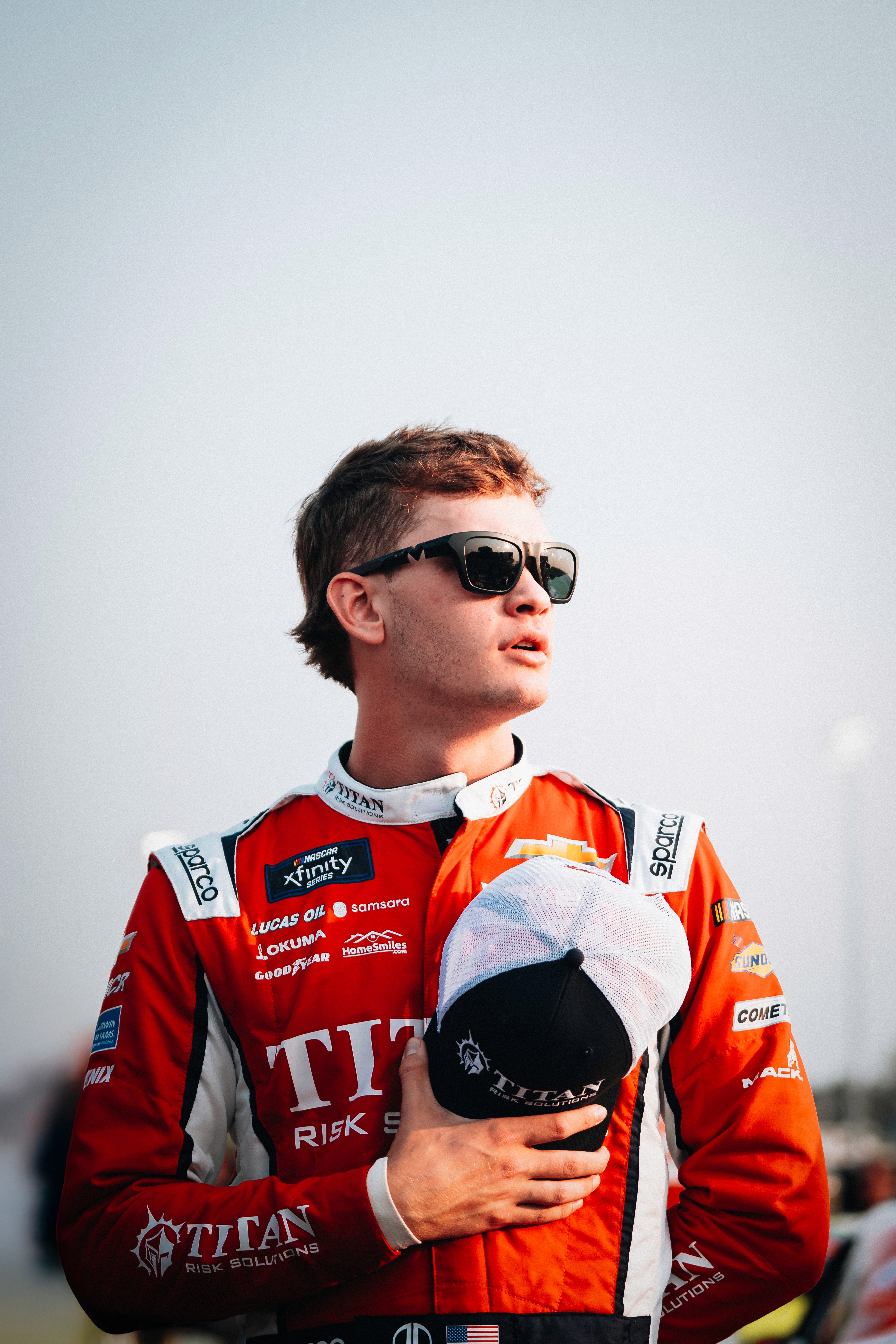
At a race, you may be thinking about where the action is going to happen and how quickly you can move between locations.
At a wedding, you're thinking about timing, emotion, lighting, and making sure you don't miss moments that will only happen once.
At a concert, you're reacting to the performance, the crowd, the lighting, and the artist all at the same time.
That's part of what makes travel projects so valuable. They force you to become comfortable being uncomfortable. You cannot rely on knowing the venue or working in the exact same environment every week.
You have to arrive ready to adapt.
But Traveling for Work Is Still Work
Traveling as a videographer sounds glamorous, and sometimes it absolutely is.
But traveling for a production is very different from going on vacation.
You are still responsible for equipment, batteries, media, backups, transportation, call times, and actually delivering what the client hired you to capture. Sometimes you're carrying thousands of dollars of gear through airports. Sometimes you're working long days and then waking up early to travel again.
There are also projects where the schedule leaves plenty of time to experience the city, and others where you may barely see anything outside of the venue, hotel, or production location.
That's part of the tradeoff.
You get opportunities to see the world and work in incredible environments, but your priority is still the project.
Then You Come Home
This is the side of videography that people see a lot less.
You get home from an exciting shoot, unload your equipment, charge everything, transfer hundreds of gigabytes of footage, create backups, and then sit down at your computer.
Sometimes for a very long time.
Editing is a completely different type of work than filming.
Filming is physical and reactive. You're moving, making decisions quickly, communicating with people, and constantly watching what is happening around you.
Editing is almost the opposite.
It's quiet.
You're sitting in one place trying to make hundreds or thousands of individual clips feel like one complete story.
For me, switching between those two environments can almost feel like switching careers.
Editing Is Where the Story Actually Comes Together
As much as I love filming, some of the most important creative decisions happen during the edit.
You may capture an incredible moment on location, but the edit determines how that moment is experienced.
Which shot comes before it?
How long do you hold on it?
What does the music do?
Do you use the natural audio?
Do you slow it down?
Do you cut immediately to something else?
Those decisions completely change how a video feels.
Editing also gives you time to notice things you may have missed while filming. Sometimes a small reaction in the background becomes one of my favorite shots. Sometimes footage I thought would be important during the shoot barely makes the final video.
That process is part of what keeps editing interesting.
The Hardest Part Is Probably the Transition Between the Two
The biggest challenge for me isn't necessarily traveling or editing individually. It's switching between them.
You can spend several days constantly moving and working around people, then suddenly come home and spend the next few days almost entirely at a desk.
One environment gives you constant stimulation.
The other requires long periods of concentration.
Finding a rhythm between the two is something I'm still learning.
There's always another project to edit, another email to answer, another shoot to prepare for, and another piece of equipment that needs to be charged.
When you run a video production business, you're rarely only a videographer or only an editor. You're constantly moving between roles.
Which One Do I Prefer?
If you asked me whether I'd rather travel and film or stay home and edit, I'd probably choose filming.
There's something about being on location that is difficult to replace. I enjoy the unpredictability of it. I like meeting people, experiencing new environments, and figuring out how to capture something while it's happening.
Whether that means being at a NASCAR race, filming a wedding in a new city, standing beside a concert stage, or working on a commercial production, I like being where the story is actually happening.
At the same time, I don't think I'd enjoy filmmaking nearly as much if I never got to edit.
Editing is where you get to take everything you experienced during the shoot and turn it into something other people can experience too.
Without that part of the process, you're really just collecting footage.
The combination of both is what makes filmmaking interesting to me.
The Reality of Being a Full-Time Videographer
The more time I've spent working professionally in video, the more I've realized that the job doesn't really fit into one category.
Sometimes you're a filmmaker.
Sometimes you're an editor.
Sometimes you're traveling across Europe for a music artist.
Sometimes you're flying out for NASCAR.
Sometimes you're driving to a wedding venue you've never been to before.
Sometimes you're sitting at your desk for ten hours.
Sometimes you're carrying cases through an airport.
Sometimes you're organizing folders.
And sometimes you're doing all of those things in the same week.
That's one of the reasons I still enjoy it.
There is enough variety that the job rarely feels exactly the same for very long.
Final Thoughts
I think social media tends to show the most exciting side of working in video.
You see the concerts, airplanes, NASCAR tracks, sports sidelines, beautiful wedding venues, and behind-the-scenes moments.
You don't see quite as many posts about sitting at a desk organizing footage at midnight.
But both sides matter.
Traveling and filming gives me experiences I'll probably remember for the rest of my life. Editing gives me the opportunity to turn those experiences into stories.
I don't think I would want to give up either one.
Through Version 2 Creative, I've been fortunate to work across live music, motorsports, sports, weddings, and commercial video production. Every project brings a different environment, a different challenge, and a different balance between filming and editing.
Some weeks the camera takes me somewhere completely new.
Other weeks, almost everything happens from my desk.
That's just part of the job.
Let's Create Something Worth Watching
Based in Dallas, Texas, Version 2 Creative provides commercial video production, wedding films, sports videography, music videos, photography, and drone services nationwide.
Let's Create Something Worth Watching
Based in Dallas, Texas, Version 2 Creative provides commercial video production, wedding films, sports videography, music videos, photography, and drone services nationwide.
Let's Create Something Worth Watching
Based in Dallas, Texas, Version 2 Creative provides commercial video production, wedding films, sports videography, music videos, photography, and drone services nationwide.